
The aviation and aerospace industry is evolving rapidly, creating strong demand for highly skilled professionals in engineering, airline management, aviation operations, and aerospace technology. Students today have multiple academic pathways to enter this exciting industry, including B.Tech, B.Sc Aviation, BBA, and MBA aviation programs.
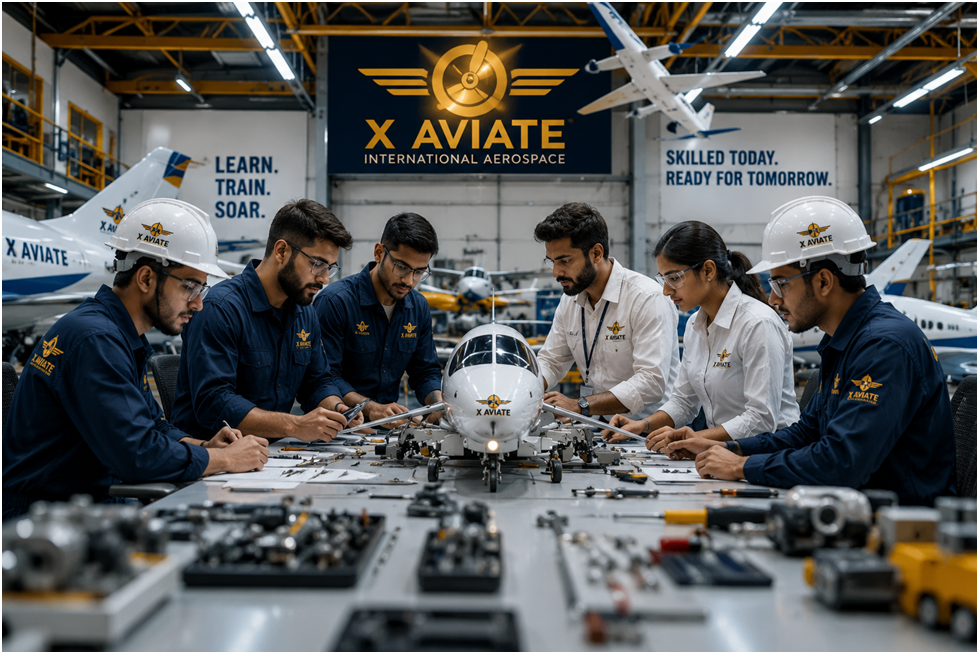
At X Aviate International Aerospace, students gain industry-oriented education and professional training that prepare them for global aviation and aerospace careers.
Aeronautical vs. Aerospace Engineering: Understanding the Difference
Many students are confused about the difference between Aeronautical Engineering and Aerospace Engineering. While both fields are closely related, their focus areas differ.
Aeronautical Engineering
Aeronautical Engineering mainly focuses on aircraft that operate within Earth’s atmosphere.
Subjects Include:
- Aircraft structures
- Propulsion systems
- Flight mechanics
- Aircraft maintenance technology
Career Opportunities in Aeronautical Engineering :
- Aircraft manufacturing companies
- Airline maintenance divisions
- Aviation safety organizations
- Defense aviation sectors
Aerospace Engineering
Aerospace Engineering is broader and includes both aircraft and space technologies.
Subjects Include:
- Spacecraft systems
- Rocket propulsion
- Satellite technology
- Aerodynamics and avionics
Career Opportunities in Aerospace Engineering Careers:
- Space research organizations
- Aerospace manufacturing companies
- Defense and missile technology sectors
- Satellite and space exploration industries
Students passionate about aircraft operations may prefer Aeronautical Engineering, while those interested in advanced aviation technology and space science often choose Aerospace Engineering.
Why an MBA in Airline & Airport Management is a Smart Career Choice
The aviation industry requires not only technical experts but also skilled management professionals.
An MBA in Airline & Airport Management prepares students for leadership roles in:
- Airlines
- International airports
- Aviation logistics
- Airport operations
- Aviation customer service
Why This Degree Has Strong Career Stability
Growing Global Air Travel
Passenger traffic continues to increase globally, creating ongoing demand for airport and airline managers.
Diverse Career Opportunities
Graduates can work in:
- Airline administration
- Airport management
- Aviation operations
- Aviation marketing and finance
Recession-Resistant Industry
Even during economic challenges, aviation infrastructure and operations continue to require experienced management professionals.
An MBA in aviation management offers long-term career growth, international exposure, and leadership opportunities.
B.Sc Aviation: Subjects, Skills & Career Opportunities
A B.Sc Aviation degree provides students with foundational aviation knowledge combined with operational and technical training.
What Students Learn
The curriculum commonly includes:
- Aviation physics
- Air navigation
- Meteorology
- Airport operations
- Aviation safety procedures
- Aircraft systems
Students also develop communication, management, and technical skills required for aviation careers.
Career Opportunities After B.Sc Aviation
Graduates can pursue careers as:
- Airport Operations Executive
- Flight Dispatcher
- Ground Operations Officer
- Aviation Safety Assistant
- Airline Customer Service Executive
The degree also serves as a strong foundation for advanced aviation certifications and higher education programs.
Top Industries Hiring Aeronautical Engineers Beyond Airlines
Aeronautical Engineers are not limited to commercial airlines alone. Their technical expertise is valuable across several high-growth industries.
1. Defense & Military Aviation
Defense organizations recruit aeronautical engineers for:
- Fighter aircraft systems
- Aircraft maintenance
- Aviation research projects
2. Space & Satellite Industries
Space agencies and satellite companies require aerospace experts for advanced aviation and space technologies.
3. Aircraft Manufacturing Companies
Global aircraft manufacturers hire engineers for:
- Aircraft design
- Quality testing
- Structural analysis
4. Drone & UAV Technology
The growing drone industry creates opportunities in:
- UAV design
- Drone operations
- Aerospace software systems
5. Aviation Research & Development
Research organizations focus on:
- Sustainable aviation technology
- Advanced propulsion systems
- Future aerospace innovation
This wide career scope makes aeronautical engineering one of the most dynamic engineering fields today.
Engineering vs. Pilot Training: Can Students Combine Both?
Many aviation students wonder whether they should pursue engineering or pilot training. The truth is that combining both can create exceptional career opportunities.
Advantages of Combining Engineering & Pilot Training
Technical Understanding
Engineering knowledge helps pilots better understand:
- Aircraft systems
- Flight performance
- Aviation technology
Strong Career Flexibility
Students gain multiple career pathways in:
- Commercial aviation
- Aerospace engineering
- Aviation operations
- Flight safety and technical management
Competitive Industry Advantage
Professionals with both technical and flying expertise are highly valued in modern aviation industries.
Many students first complete engineering degrees and later pursue Commercial Pilot License (CPL) training to maximize career opportunities.
Build Your Aviation Career with X Aviate International Aerospace
Choosing the right academic program is the foundation for a successful aviation career. Whether your interest lies in aerospace engineering, aviation management, pilot training, or airport operations, the aviation industry offers endless possibilities.
X Aviate International Aerospace provides professional aviation education, industry-oriented degree programs, expert faculty guidance, and career-focused training that prepare students for the future of global aviation.
If you are passionate about aviation, aerospace technology, or airline management, now is the perfect time to begin your journey toward a successful aviation career.