
Unlocking the Physics of Flight: Water Meets Sky
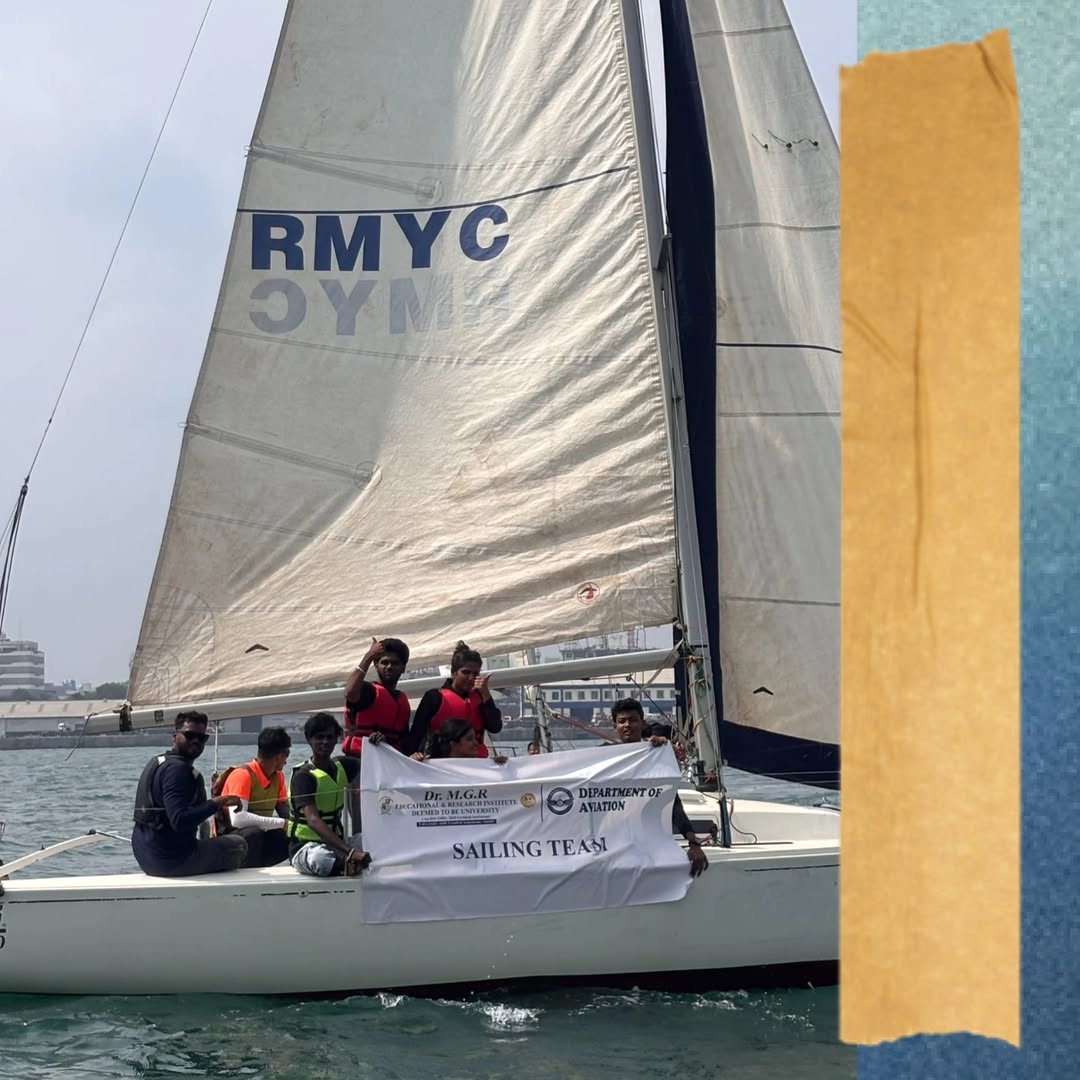
At X Aviate International Aerospace, we believe that understanding the core principles of flight requires looking beyond the traditional cockpit. Recently, our official channels highlighted a fascinating comparison: the movement of an aircraft in the sky shares identical fundamental aerodynamic principles with a J80 sailboat navigating the water. For aspiring pilots and aviation students training in Chennai, grasping this cross-disciplinary physics is a powerful step toward mastering aircraft control, stability, and maneuverability.
Whether you are preparing for your private pilot license checkride or embarking on a comprehensive commercial pilot training pathway, connecting fluid dynamics across mediums deepens your technical comprehension. Let us break down how the forces acting on a J80 sailboat mirror those acting on a fixed-wing aircraft.
The Shared Science: Lift, Drag, and Fluid Dynamics
Air and water are both fluids. While their densities differ significantly, the physical laws governing their flow over a contoured surface remain remarkably consistent. Bernoulli’s principle and Newton’s laws of motion apply equally to a cambered aircraft wing moving through the air and a fabric sail cutting through the wind.
How an Aircraft Generates Lift
An aircraft utilizes fixed or rotary wings (airfoils) to generate lift. As the engine thrusts the aircraft forward, air accelerates over the upper and lower surfaces of the wing. Due to the shape and angle of attack, lower pressure is created above the wing and higher pressure beneath it, resulting in an upward force called lift. Pitch, roll, and yaw are managed through control surfaces such as ailerons, elevators, and rudders, ensuring precise stability and direction in a three-dimensional airspace.
How a J80 Sailboat Harnesses Aerodynamics
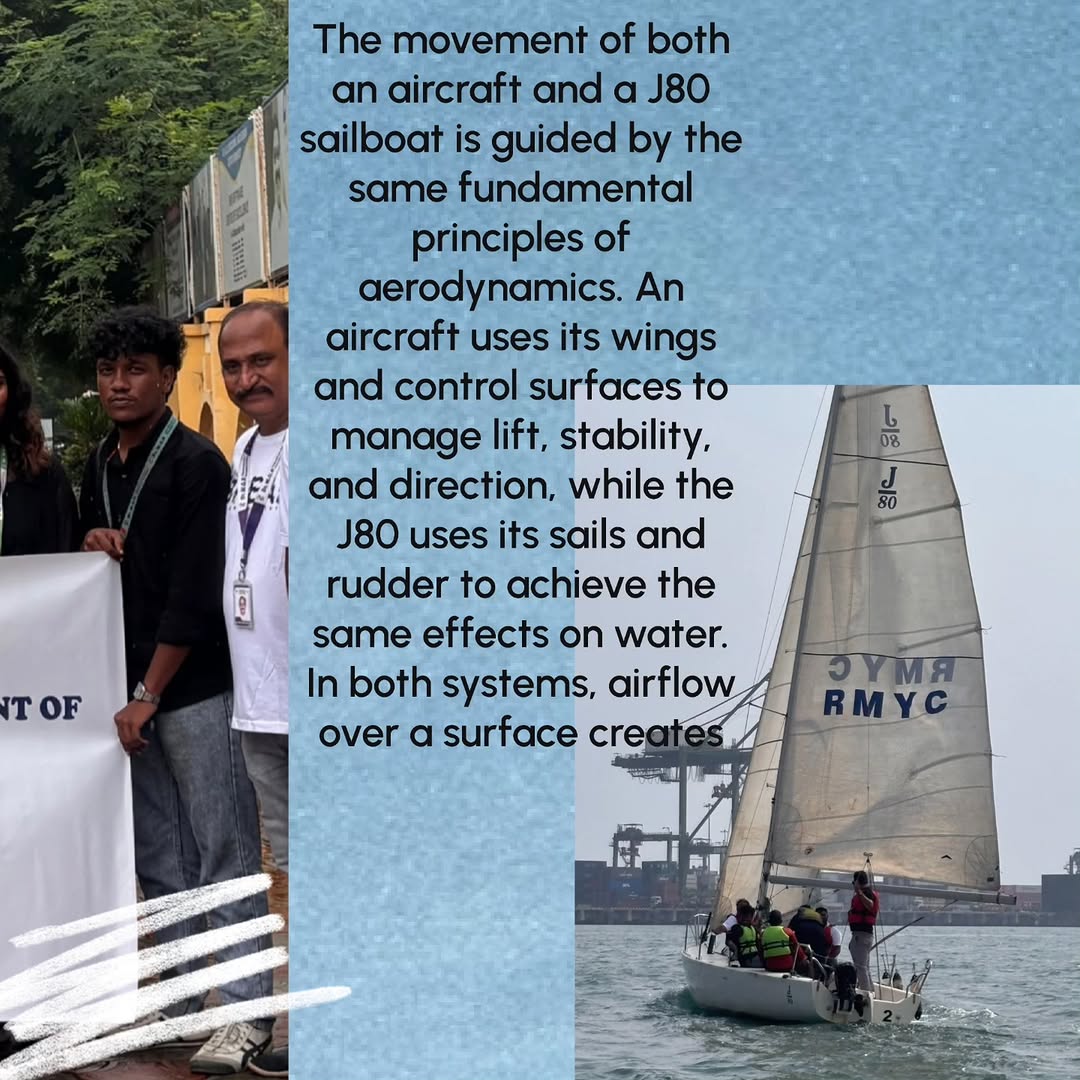
Surprisingly, a sailboat is essentially an aircraft operating vertically on water. The J80 sailboat uses its sails as vertical airfoils. When the wind flows across the sail, it creates a pressure differential—effectively generating lift, which pulls the boat sideways and forward. The keel and rudder act beneath the water as hydrofoils to counteract leeway and provide directional control, mimicking the vertical stabilizer and rudder of an airplane.
Control Inputs: Ailerons versus Sail Trim
One of the most critical lessons taught at X Aviate International Aerospace is the importance of micro-adjustments. In aviation, minor deflections of the ailerons or elevator alter the airflow, instantly shifting the aircraft’s balance. A fraction of a degree change in pitch can mean the difference between a stabilized approach and a missed stabilization.
Similarly, a J80 skipper must continuously adjust sail trim and the tiller. Small adjustments to the sheets (ropes controlling the sails) change the angle of attack relative to the apparent wind. Just as a pilot feels the aircraft respond to turbulence and control inputs, a sailor feels the heel and acceleration of the boat through the helm. Both disciplines require acute spatial awareness, rapid decision-making, and a deep intuition for fluid dynamics.
Why Cross-Disciplinary Learning Matters for Future Pilots
Why do we emphasize these conceptual bridges at our Chennai-based flight training institution? Because true aviators do not just memorize checklists; they understand the ‘why’ behind every instrument reading and control movement.
- Enhanced Spatial Awareness: Visualizing invisible forces like airflow helps students anticipate how crosswinds and density altitude affect aircraft performance.
- Intuitive Control Management: Recognizing that a control surface is simply redirecting a fluid builds a stronger muscle memory for smooth, precise flying.
- Advanced Problem Solving: Emergency situations and complex flight operations require the adaptive thinking fostered by studying diverse aerodynamic systems.
Begin Your Aviation Journey with X Aviate International Aerospace
Mastering the skies demands world-class instruction, rigorous simulator training, and a passion for aeronautics. At X Aviate International Aerospace, we provide comprehensive ground school, advanced flight training programs, and dedicated career guidance to transform aviation enthusiasts into professional flight crew members.
If you are ready to earn your wings, understand the profound mechanics of flight, and launch your career in the global aviation industry, connect with our admissions team in Chennai today. Your journey to the flight deck starts here.
Frequently Asked Questions
What is X Aviate International Aerospace?
X Aviate International Aerospace is a premier flight training institution based in Chennai, India, offering comprehensive pilot training programs, simulator training, and career guidance for aspiring aviators.
How are sailboats and aircraft aerodynamically similar?
Both use fluid dynamics to generate motion. An aircraft uses wings (airfoils) to generate lift in the air, while a J80 sailboat uses sails as vertical airfoils to harness wind power and move across water.
Why is understanding fluid dynamics important for student pilots?
Understanding fluid dynamics helps student pilots develop better spatial awareness, intuitive aircraft control, and a deeper grasp of how weather, lift, and drag affect flight performance.
Where is X Aviate International Aerospace located?
X Aviate International Aerospace is located in Chennai, India, providing state-of-the-art aviation education and flight training pathways.