
Mastering the Art of Aircraft Pushback Operations
An aircraft doesn’t just move backward out of a gate on its own. Every movement on the ramp requires absolute precision, flawless communication, and strict adherence to safety protocols. At X Aviate International Aerospace, we believe that understanding these vital ground procedures is fundamental for every aspiring pilot and aviation professional.
When you watch an aircraft leave the terminal stand, you are witnessing a carefully coordinated choreography between the flight deck, ground control, and the ramp handling team. Let us break down what really happens during a standard pushback operation.
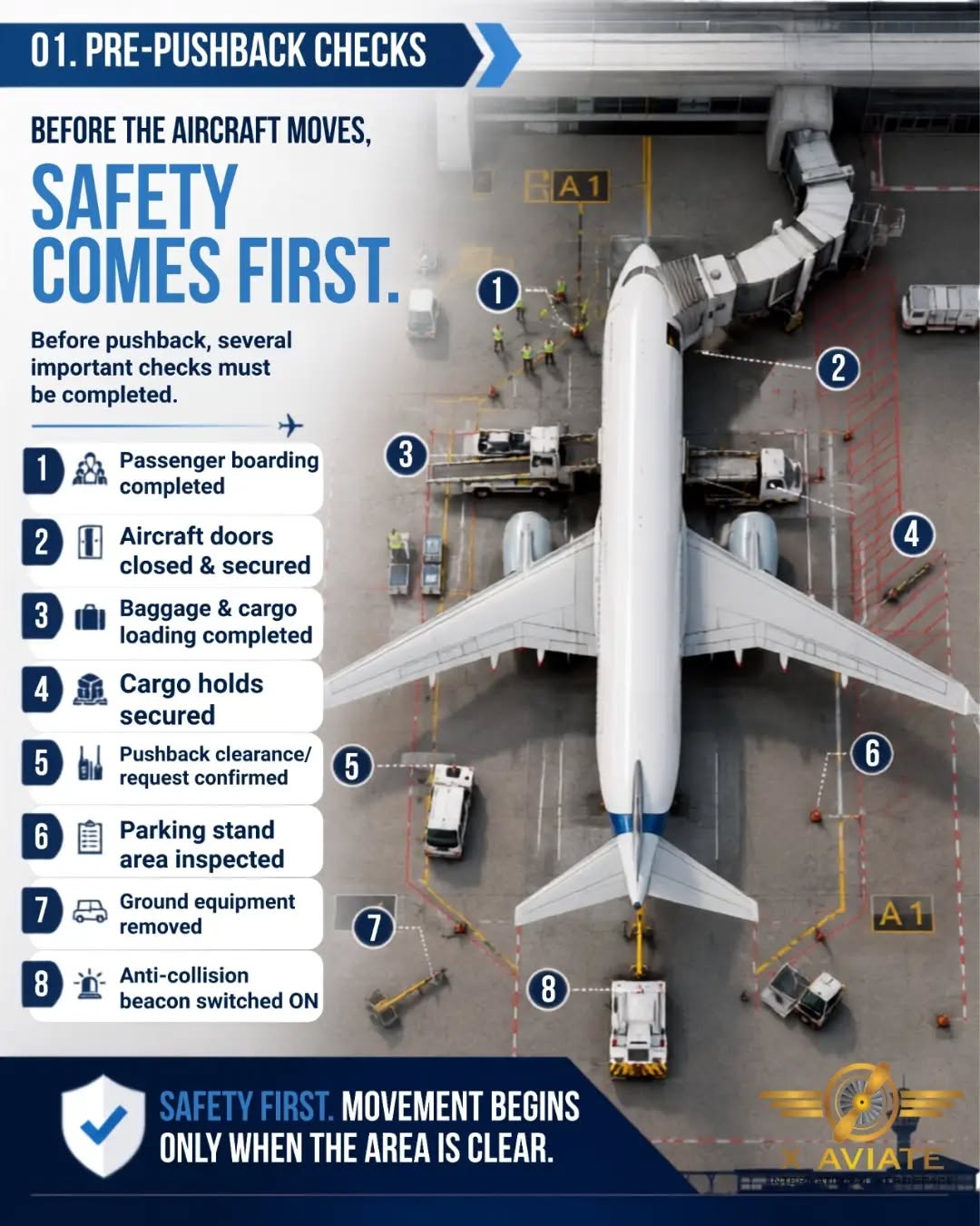
1. Comprehensive Pre-Pushback Checks
Before any physical movement can occur, the flight crew and ground handlers must complete a series of rigorous checks. Inside the cockpit, pilots run through the pushback checklist, ensuring the parking brake is set, flight controls are clear, and the inertial reference systems are aligned. Concurrently, the ground crew conducts a visual walk-around inspection of the aircraft exterior, checking for any potential hazards, secure panel doors, and proper pin insertion for the landing gear.
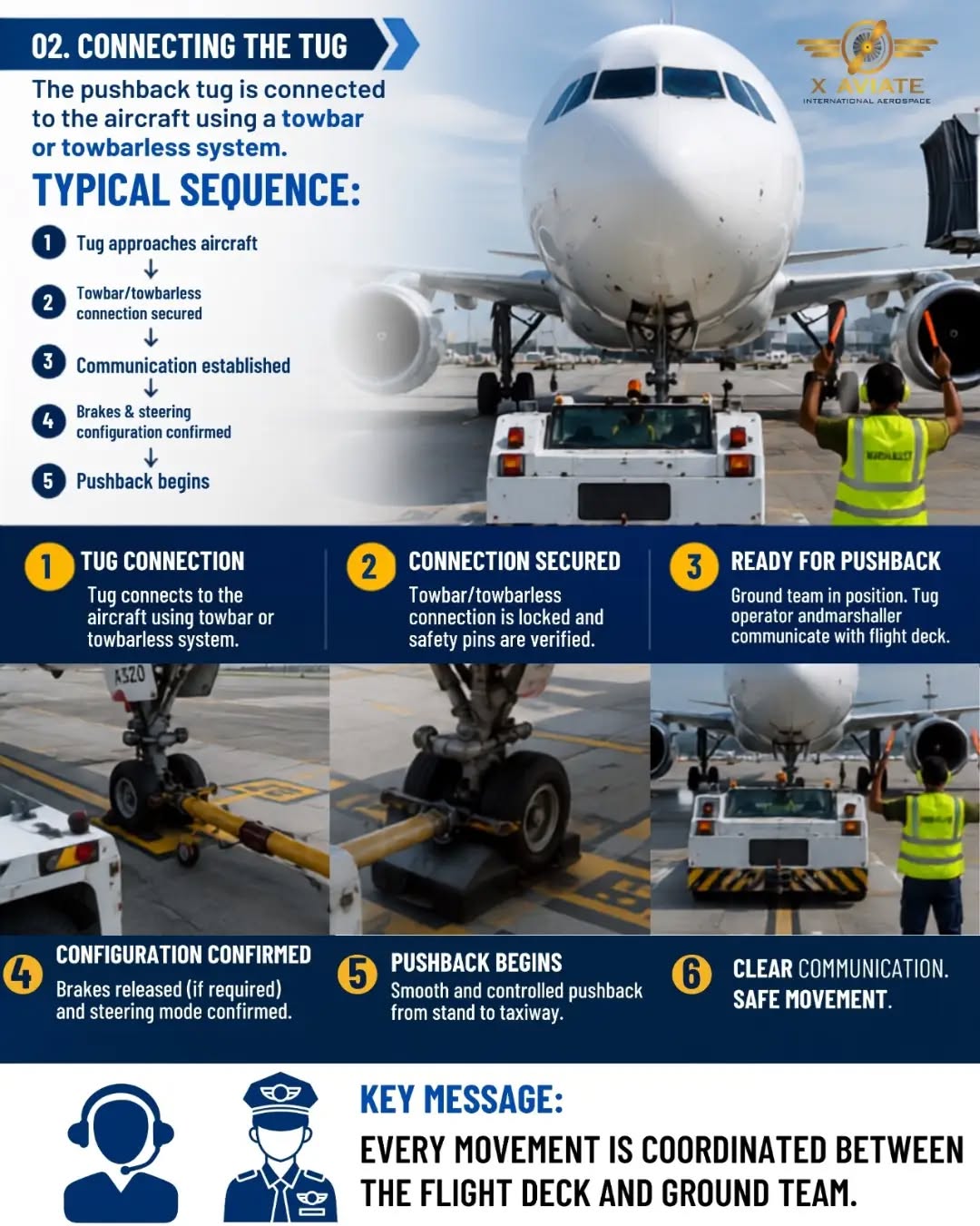
2. Secure Tug Connection and Bypass Pins
Once the clearance is granted, the pushback tractor—often called a tug—is reversed up to the nose gear. A towbar or towbarless tug is securely attached to the nose landing gear. One of the most critical steps here is the insertion of the steering bypass pin. This pin isolates the aircraft’s nose wheel steering system from the flight deck, allowing the ground crew to steer the aircraft safely during the pushback without conflicting with cockpit controls.
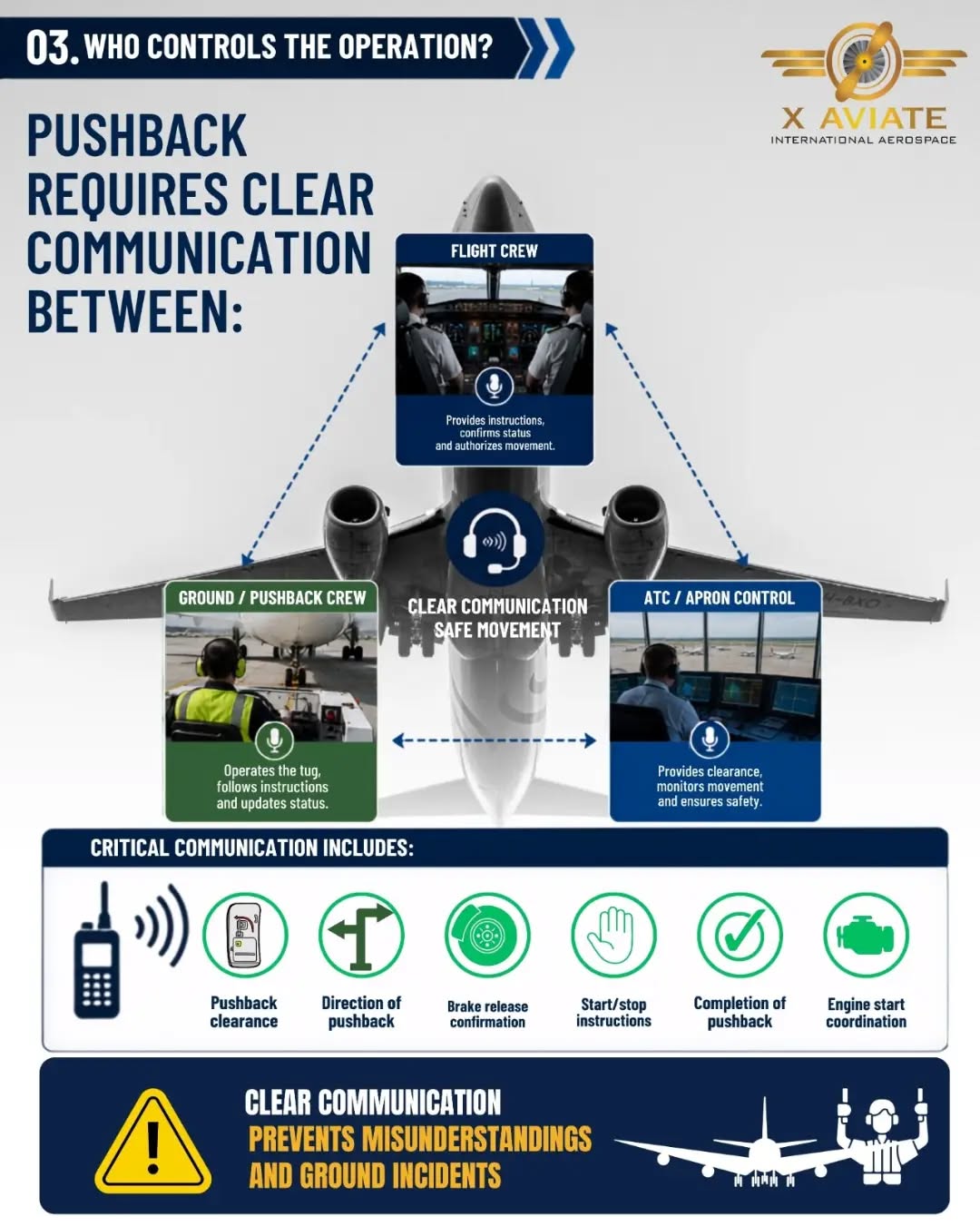
3. Clear Communication and Headset Connection
Communication is the lifeline of safe ramp operations. The ground crew lead connects a headset directly to the aircraft’s interphone system, establishing a direct, closed-loop communication channel with the captain. Before any movement begins, the ground crew verifies brake status and confirms pushback clearance with the air traffic control tower or ground control. The classic phrase, “Parking brake released, commencing pushback,” signals the start of the maneuver.
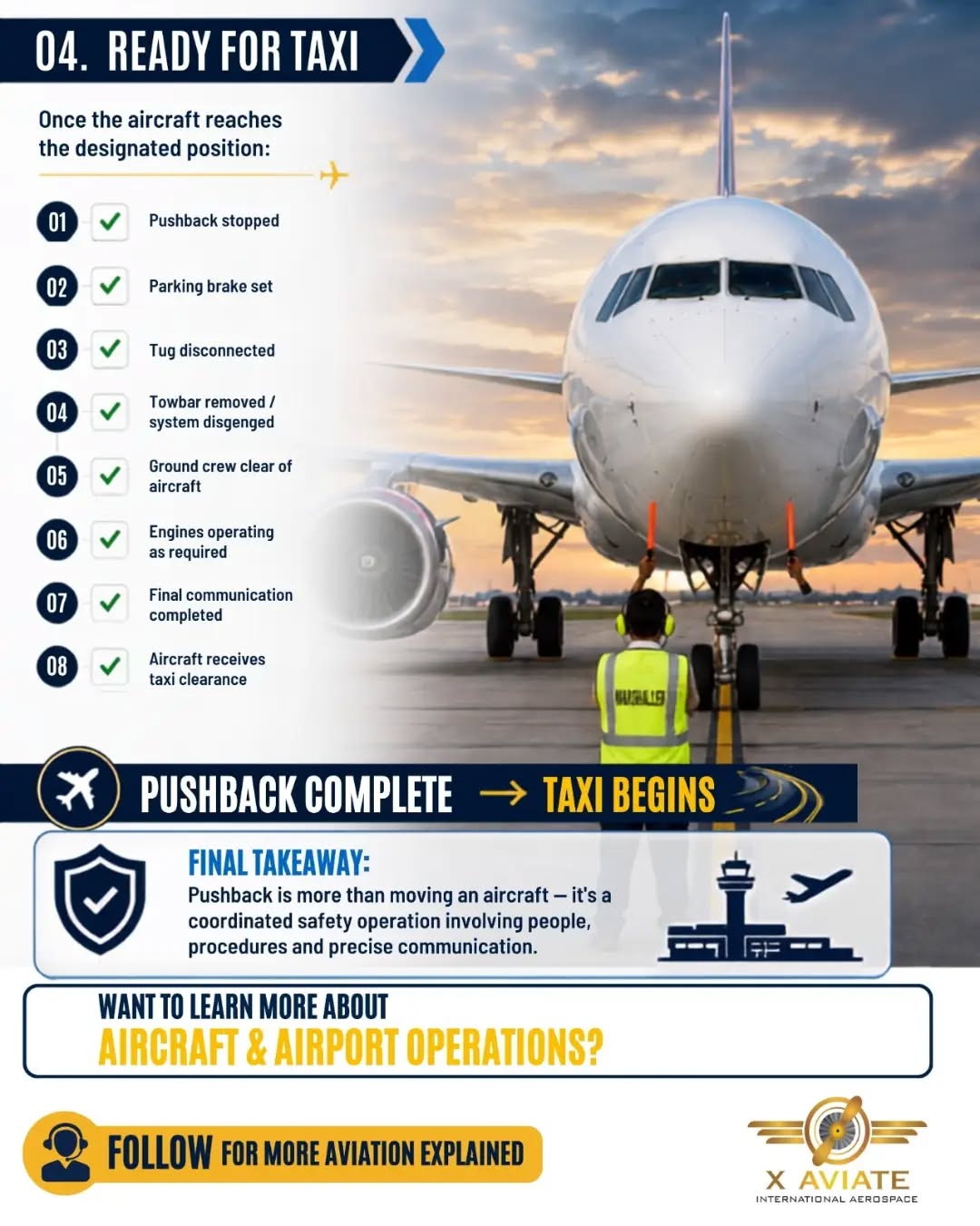
4. Final Taxi Clearance and Engine Start
As the tug maneuvers the aircraft onto the designated taxi lane facing the correct direction, the ground crew monitors the surrounding ramp traffic and wing clearance. Once the pushback is successfully completed, the aircraft comes to a complete stop, the parking brake is re-engaged, the towbar and bypass pin are disconnected, and the ground crew gives the universal thumbs-up signal to the flight deck. The engines are then started, and the aircraft receives its final taxi clearance to the active runway.
Why Ground Operations Matter for Future Pilots
Understanding airport ground operations and ramp safety is just as crucial for a pilot as mastering aerodynamics and instrument ratings. At X Aviate International Aerospace in Chennai, our comprehensive aviation training programs ensure students gain holistic knowledge of both airborne and ground-based procedures. Whether you are aiming for a commercial pilot license or upgrading your skills with simulator training, a deep appreciation of every stakeholder in the aviation ecosystem makes you a safer, more professional aviator.
Follow X Aviate International Aerospace on Instagram and our official website for more aviation insights, aircraft operations breakdowns, and expert career guidance tailored for the next generation of pilots.
Frequently Asked Questions
What is an aircraft pushback?
An aircraft pushback is an airport procedure during which an aircraft is pushed backward away from a passenger boarding gate by an external vehicle called a tug.
Why do aircraft need a tug to move backward?
Most commercial aircraft are not designed to reverse under their own jet or propeller power while parked close to terminal buildings, as jet blast can cause severe damage to ground equipment and structures.
What is the role of the steering bypass pin during pushback?
The steering bypass pin disengages the aircraft’s nose wheel steering hydraulics from the cockpit controls, allowing the ground crew to steer the aircraft safely during the push.
Who communicates with the pilot during a pushback?
A certified ground crew member communicates directly with the flight deck via a headset plugged into the aircraft’s interphone system.
How does X Aviate International Aerospace help aspiring pilots?
X Aviate International Aerospace offers world-class pilot training programs, simulator training, and complete career guidance for aspiring aviation professionals in Chennai and beyond.