
The aviation industry offers exciting opportunities beyond becoming a pilot. Cabin crew professionals and airport ground staff play a major role in ensuring passenger comfort, safety, and smooth airport operations. With global airlines expanding rapidly, skilled aviation hospitality professionals are in high demand.
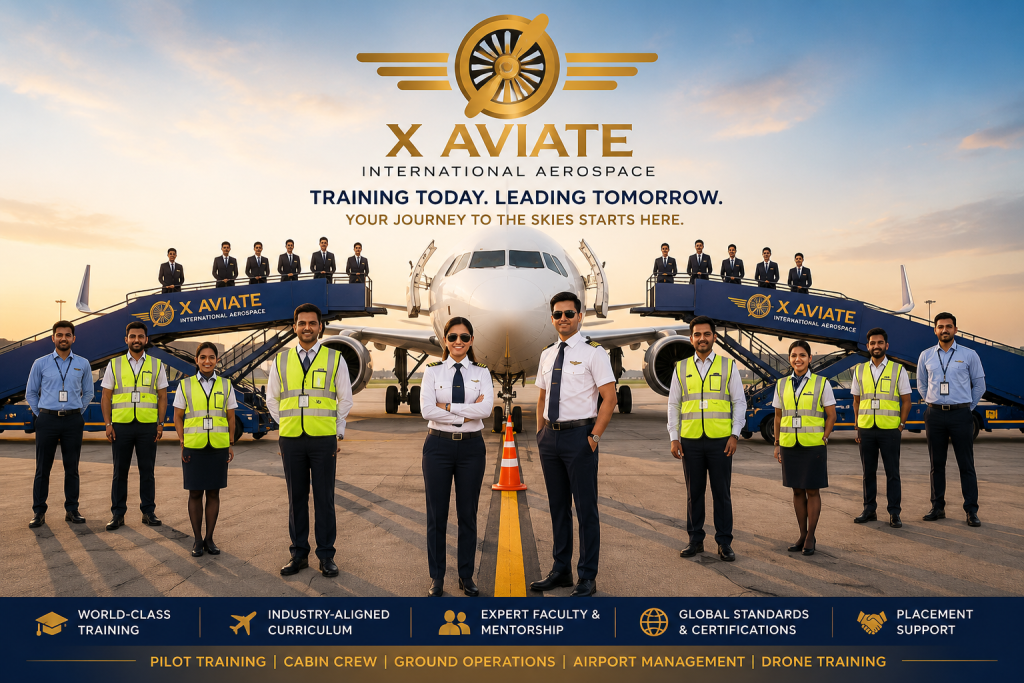
At X Aviate International Aerospace, students receive professional training that prepares them for careers in cabin crew management, airport operations, customer service, and international aviation hospitality.
Interview Ready: What Airline Recruiters Look for in Cabin Crew Candidates
Airline interviews are highly competitive, and recruiters evaluate much more than appearance alone. Candidates are assessed based on communication, confidence, teamwork, and problem-solving abilities.
Key Qualities Airlines Expect
Strong Communication Skills
Cabin crew members interact with passengers from different countries and cultures. Clear and professional communication is essential.
Positive Personality & Confidence
Recruiters look for candidates who are:
- Friendly and approachable
- Calm under pressure
- Confident in group discussions
Teamwork & Leadership
Cabin crew professionals must work efficiently with pilots, co-crew members, and airport staff during every flight.
Professional Grooming
Well-maintained appearance and presentation standards are mandatory in aviation hospitality careers.
Preparing through mock interviews and group discussions can significantly improve selection chances during airline recruitment drives.
A Day in the Life of a Flight Attendant
Many students dream about becoming cabin crew professionals, but understanding the daily responsibilities is important before entering the aviation industry.
Pre-Flight Preparation
A flight attendant’s day often begins with:
- Pre-flight briefings
- Safety procedure reviews
- Passenger information updates
- Uniform and grooming inspections
During the Flight
Cabin crew responsibilities include:
- Welcoming passengers
- Demonstrating safety procedures
- Assisting travelers during the journey
- Serving meals and refreshments
- Handling emergency situations professionally
Flight attendants are trained to ensure both passenger comfort and safety throughout the journey.
Post-Flight Duties
After landing, cabin crew members:
- Assist passenger departure
- Complete flight reports
- Coordinate with airport ground staff
- Prepare for the next scheduled flight
The career offers exciting travel experiences, dynamic work environments, and opportunities to interact with people worldwide.
Ground Staff Careers: Beyond the Cabin
The aviation industry also offers rewarding careers in airport ground operations and customer service.
Popular Ground Staff Roles
Airport Customer Service Executive
Helps passengers with:
- Check-in procedures
- Boarding assistance
- Ticketing support
- Travel inquiries
Baggage Handling & Ramp Operations
Responsible for:
- Aircraft loading and unloading
- Baggage coordination
- Flight turnaround support
Airport Operations Coordinator
Ensures smooth airport functioning through:
- Flight scheduling coordination
- Safety compliance monitoring
- Operational communication
Ground operations professionals are essential for maintaining efficient airport management systems.
Grooming Standards Required for International Airlines
Professional grooming is one of the most important aspects of cabin crew careers.
Grooming Expectations Include
- Neat hairstyles
- Proper makeup and skincare
- Professional body language
- Clean and well-maintained uniforms
- Good personal hygiene
International airlines expect candidates to maintain elegant presentation standards because cabin crew members represent the airline brand directly to passengers.
Training institutes like X Aviate International Aerospace provide specialized grooming and personality development sessions to help students meet airline expectations.
Why Communication & Language Skills Matter in Aviation
Aviation is an international industry where professionals interact with passengers from different regions and cultures every day.
Importance of Communication Skills
Strong communication helps aviation professionals:
- Handle passenger concerns effectively
- Manage emergency situations calmly
- Build positive customer experiences
- Coordinate with international airline teams
Benefits of Multilingual Skills in Aviation
Knowing multiple languages can create additional career opportunities in:
- International airlines
- Luxury aviation hospitality
- Airport customer service
- Global travel operations
English fluency remains essential, while additional languages provide a competitive advantage during recruitment.
Start Your Cabin Crew & Aviation Hospitality Career
Cabin crew and ground operations careers offer exciting opportunities for students passionate about travel, hospitality, communication, and aviation services.
X Aviate International Aerospace provides industry-oriented training, personality development, grooming support, and practical aviation education that prepares students for successful careers in the global aviation industry.
If you dream of working with airlines and building an exciting international career, now is the perfect time to begin your aviation journey.