
The aviation industry has evolved dramatically over the years, thanks to continuous advancements in Aviation Design & Innovation. From fuel-efficient aircraft and smart cockpit systems to sustainable aviation technologies, innovation is transforming the way people travel across the world.
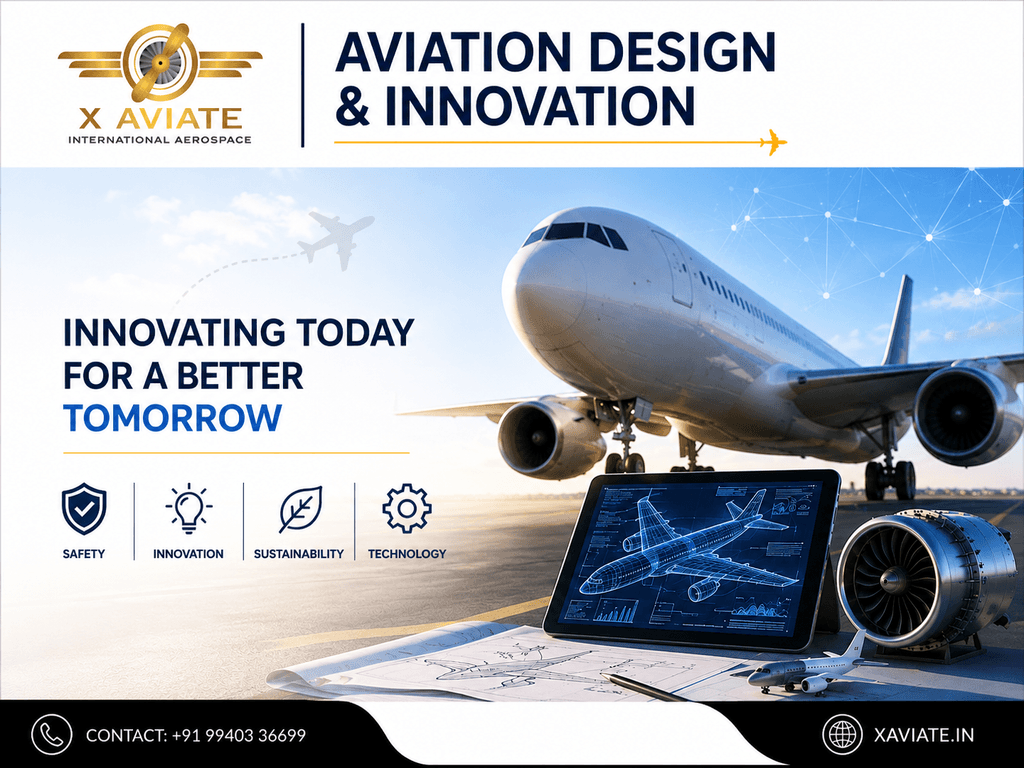
Today, aviation is not only about flying—it is about creating safer, smarter, and more efficient aircraft that redefine the future of air transportation.
Why is Innovation Important in Aviation?
Innovation drives the aviation industry forward by improving safety, reducing costs, and enhancing the overall flying experience.
Some key benefits include:
- Improved Flight Safety
- Better Fuel Efficiency
- Enhanced Passenger Comfort
- Sustainable Aviation Solutions
- Faster Aircraft Performance
- Advanced Navigation Systems
- Smart Airport Technologies
These innovations help airlines operate more efficiently while reducing their environmental impact
Emerging Technologies in Aviation
Modern aviation is embracing several groundbreaking technologies, including:
Sustainable Aircraft
New aircraft are being designed with lightweight materials and fuel-efficient engines to reduce emissions and improve environmental sustainability.
Artificial Intelligence (AI)
AI is helping airlines improve flight planning, predictive maintenance, and operational decision-making.
Smart Cockpit Systems
Digital flight decks provide pilots with real-time information, enhancing situational awareness and flight safety.
Electric & Hybrid Aircraft
Electric and hybrid-powered aircraft represent the future of eco-friendly aviation and sustainable air travel.
Autonomous Aviation
Automation and intelligent systems are paving the way for advanced aircraft operations and next-generation air mobility.
Skills Required for Aviation Innovation
Professionals working in aviation innovation should develop skills such as:
- Creative Thinking
- Engineering Design
- Problem Solving
- Research & Development
- Computer-Aided Design (CAD)
- Artificial Intelligence Applications
- Analytical Thinking
- Project Management
- Team Collaboration
These skills help transform innovative ideas into practical aviation solutions.
Career Opportunities
Aviation Design & Innovation opens doors to exciting career opportunities, including:
- Aircraft Design Engineer
- Aerospace Engineer
- Aviation Technology Specialist
- Research & Development Engineer
- Aircraft Systems Engineer
- Avionics Engineer
- Innovation Consultant
- Product Development Engineer
- UAV & Drone Technology Specialist
As aviation technology continues to evolve, professionals with innovative thinking are becoming increasingly valuable worldwide.
The Future of Aviation Innovation
The future of aviation will be shaped by sustainable technologies, artificial intelligence, autonomous flight systems, advanced materials, and digital transformation.
Future aircraft will be safer, quieter, more energy-efficient, and environmentally responsible, creating new opportunities for innovation across the aviation industry.
Conclusion
Aviation Design & Innovation is transforming the aviation industry by introducing smarter technologies, sustainable solutions, and advanced aircraft systems. It plays a vital role in improving safety, efficiency, and passenger experience while shaping the future of global air transportation.
For students and professionals passionate about technology and aviation, this field offers exciting opportunities to contribute to the next generation of aerospace innovation.Innovate Today. Design Tomorrow. Transform the Future of Aviation.