
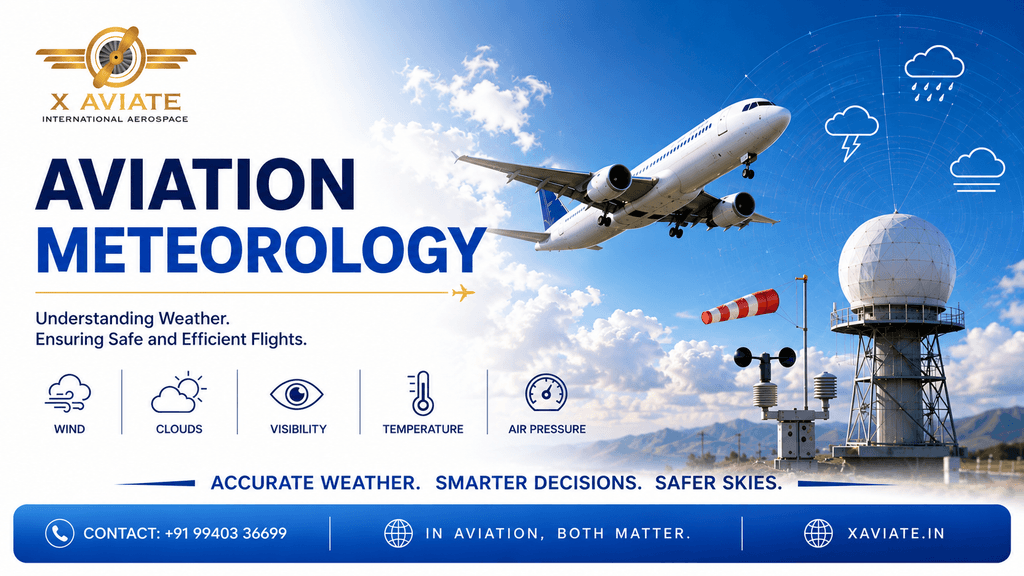
Weather plays a crucial role in every stage of a flight—from takeoff and cruising to landing. Aviation Meteorology is the branch of science that studies atmospheric conditions and their impact on aircraft operations. By understanding weather patterns, pilots, air traffic controllers, and aviation professionals can make informed decisions that ensure safe and efficient flights. As aviation continues to evolve, meteorology remains one of the most important subjects in aviation training and flight operations
What is Aviation Meteorology?
Aviation Meteorology is the study of weather phenomena that affect aviation. It focuses on observing, analyzing, and forecasting atmospheric conditions to help ensure safe aircraft operations. Meteorological information enables aviation professionals to identify potential weather hazards and plan flights more effectively
Why is Aviation Meteorology Important?
Weather conditions can significantly influence flight safety and operational efficiency.
Aviation Meteorology helps:
- Improve flight safety
- Support accurate flight planning
- Reduce weather-related delays
- Enhance fuel efficiency
- Assist in selecting the safest flight routes
- Minimize operational risks
Reliable weather information allows pilots to make timely decisions before and during a flight.
Key Weather Elements in Aviation
Wind
Wind affects aircraft during takeoff, landing, and cruising. Understanding wind direction and speed helps pilots maintain control and optimize flight performance.
Clouds
Cloud formations provide valuable information about atmospheric conditions. Certain cloud types may indicate turbulence, thunderstorms, or reduced visibility.
Temperature
Air temperature influences aircraft performance, engine efficiency, and runway requirements, especially during takeoff.
Visibility
Clear visibility is essential for safe flight operations. Fog, haze, dust, and heavy rainfall can reduce visibility and impact airport operations.
Air Pressure
Atmospheric pressure affects aircraft altitude readings and flight performance. Accurate pressure information ensures proper navigation and safe separation between aircraft.
Humidity
Humidity contributes to cloud formation, precipitation, and changes in atmospheric stability, which may affect flight conditions.
Common Weather Hazards in Aviation
Pilots and aviation professionals monitor several weather hazards, including:
- Thunderstorms
- Turbulence
- Wind Shear
- Fog
- Icing
- Heavy Rain
- Snow
- Lightning
- Dust Storms
- Tropical Cyclones
Understanding these conditions helps reduce risks and improve operational safety.
Weather Forecasting in Aviation
Modern aviation relies on advanced weather forecasting systems that provide real-time meteorological information.
These systems include:
- Satellite Weather Monitoring
- Doppler Weather Radar
- Meteorological Observation Stations
- Aviation Weather Reports (METAR)
- Terminal Aerodrome Forecasts (TAF)
- Weather Briefing Systems
These technologies help aviation professionals prepare for changing weather conditions before departure.
Careers Related to Aviation Meteorology
Knowledge of aviation meteorology is valuable in several aviation careers, including:
- Airline Pilot
- Flight Dispatcher
- Air Traffic Controller
- Aviation Meteorologist
- Airport Operations Officer
- Flight Operations Executive
- Aviation Safety Specialist
Weather awareness is an essential skill for professionals working in aviation.
Future of Aviation Meteorology
Emerging technologies such as Artificial Intelligence (AI), machine learning, satellite imaging, and predictive weather analytics are transforming aviation weather forecasting.
These innovations enable more accurate forecasts, improved flight planning, and enhanced aviation safety for the future.
Conclusion
Aviation Meteorology is one of the most important foundations of modern aviation. By understanding weather conditions and their impact on flight operations, aviation professionals can make safer decisions, improve operational efficiency, and ensure smooth air travel.
As technology advances, meteorology will continue to play a vital role in making aviation safer, smarter, and more reliable across the world.
Understanding the Weather is the First Step Toward Safe Aviation.