
As aviation becomes increasingly digital, User Experience (UX) and User Interface (UI) design play a vital role in improving how passengers, pilots, airport staff, and airlines interact with technology. From airline booking platforms and airport self-service kiosks to cockpit displays and mobile travel applications, Aviation UX/UI is transforming the future of aviation through intuitive, user-centered design.
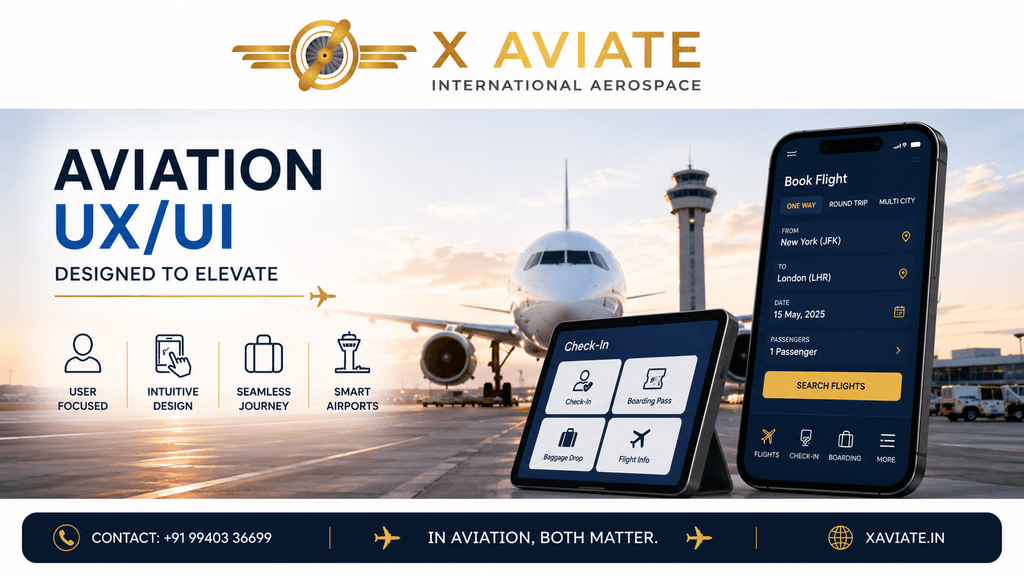
Modern aviation is no longer just about aircraft—it is also about delivering seamless digital experiences that improve efficiency, safety, and customer satisfaction.
What is Aviation UX/UI?
Aviation UX/UI focuses on designing user-friendly digital interfaces and experiences for aviation systems, applications, and services.
UX (User Experience) ensures that aviation technology is easy to use, efficient, and accessible, while UI (User Interface) creates visually appealing and interactive designs that enhance user engagement.
Together, UX and UI improve the overall digital journey across the aviation ecosystem.
Why is UX/UI Important in Aviation?
Millions of passengers and aviation professionals rely on digital systems every day. A well-designed interface reduces complexity, minimizes errors, and improves operational efficiency.
Some of the key benefits include:
- Better Passenger Experience
- Faster Airport Services
- Improved Flight Operations
- Easy Navigation
- Enhanced Accessibility
- Reduced Human Errors
- Higher User Satisfaction
Effective UX/UI design helps create smooth and reliable interactions at every stage of air travel.
Applications of Aviation UX/UI
UX/UI design is widely used across the aviation industry to improve digital experiences.
Airline Booking Platforms
Simple, responsive booking systems help passengers search flights, reserve seats, and manage travel effortlessly.
Airport Self-Service Kiosks
User-friendly interfaces enable quick check-in, baggage tagging, and boarding pass generation.
Mobile Aviation Applications
Airline apps provide flight updates, boarding information, digital tickets, and customer support in a convenient mobile experience.
Cockpit & Flight Displays
Modern cockpit interfaces present critical flight information clearly, helping pilots make faster and safer decisions.
Airport Information Systems
Digital signages and information displays guide passengers through terminals with intuitive navigation.
Cabin Entertainment Systems
Interactive entertainment platforms enhance passenger comfort through personalized digital experiences.
Technologies Behind Aviation UX/UI
Modern Aviation UX/UI combines design principles with advanced technologies, including:
- User Experience (UX) Design
- User Interface (UI) Design
- Artificial Intelligence (AI)
- Human-Computer Interaction (HCI)
- Responsive Web Design
- Mobile App Design
- Data Visualization
- Accessibility Design
- Design Systems
These technologies help create digital products that are both functional and engaging.
Skills Required
Professionals interested in Aviation UX/UI should develop expertise in:
- UX Research
- UI Design
- Wireframing & Prototyping
- Figma & Adobe XD
- User Journey Mapping
- Information Architecture
- Design Thinking
- Visual Design
- Interaction Design
- Usability Testing
These skills are highly valuable as aviation continues its digital transformation.
Career Opportunities
The demand for UX/UI professionals in aviation continues to grow across airlines, airports, aerospace companies, and aviation technology firms.
Career opportunities include:
- Aviation UX Designer
- Aviation UI Designer
- Product Designer
- Mobile App Designer
- Interaction Designer
- Human Factors Specialist
- Digital Experience Designer
- Design Researcher
- Aviation Product Manager
These roles contribute to building intuitive digital experiences for the aviation industry.
The Future of Aviation UX/UI
The future of aviation will focus on intelligent, personalized, and immersive digital experiences.
Emerging trends include:
- AI-Powered User Interfaces
- Voice-Controlled Aviation Systems
- Augmented Reality (AR) Navigation
- Virtual Reality (VR) Training
- Personalized Passenger Experiences
- Smart Airport Applications
- Touchless Digital Interfaces
These innovations will make aviation technology more accessible, efficient, and user-friendly.
Conclusion
Aviation UX/UI is transforming the aviation industry by creating intuitive digital experiences that improve passenger satisfaction, operational efficiency, and flight safety. From airport terminals to aircraft cockpits, user-centered design is becoming an essential part of modern aviation.
As digital innovation accelerates, Aviation UX/UI professionals will play a key role in designing the future of smarter, safer, and more connected aviation systems.
Design Better Experiences. Simplify Aviation. Shape the Future of Flight.