
Introduction
Safety is the highest priority in aviation. While modern aviation systems are designed to prevent accidents, every airport and airline must be prepared to respond effectively when emergencies occur. An Emergency Response Procedure (ERP) provides a structured plan that helps organizations respond quickly, protect lives, minimize damage, and restore normal operations.
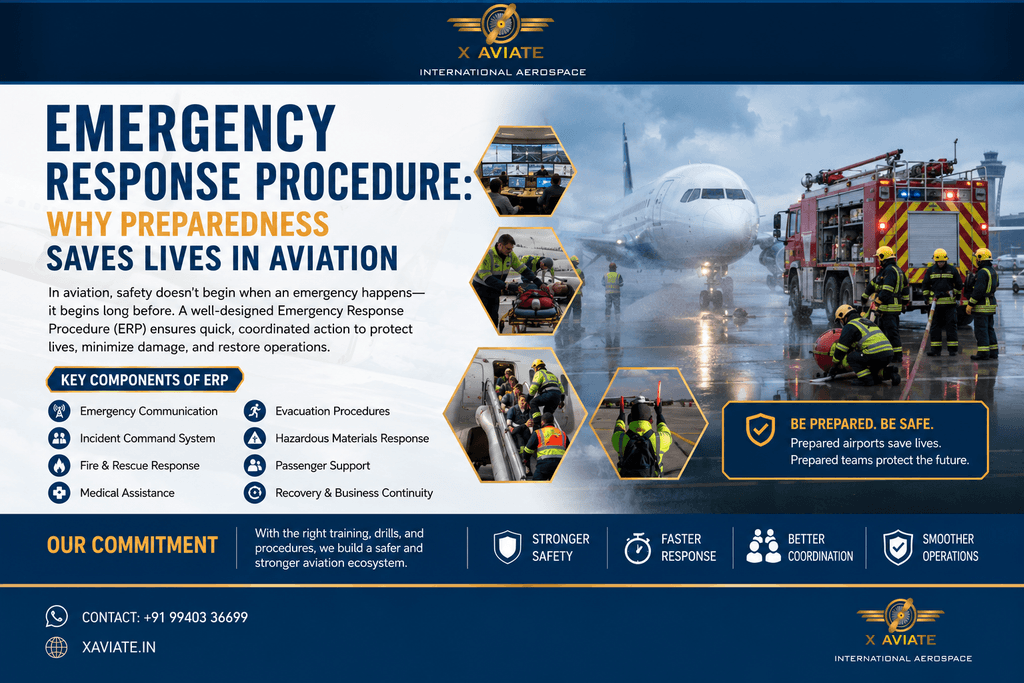
Emergency Response Team Roles
The Emergency Response Team (ERT) consists of trained professionals responsible for managing emergencies efficiently. Airport firefighters handle fire suppression and rescue operations, while medical teams provide immediate treatment to injured individuals. Air Traffic Control coordinates aircraft movements, airport security manages access and crowd control, and airline representatives assist passengers and communicate with their families. Effective teamwork among these departments ensures a quick and organized response.
Importance of Emergency Response Procedures (ERP)
An Emergency Response Procedure (ERP) is essential for minimizing risks and ensuring a coordinated response during critical situations. It helps airports and airlines protect lives, reduce property damage, and restore normal operations as quickly as possible. A well-prepared ERP also improves communication between emergency services, airline staff, and airport authorities, ensuring that everyone understands their roles during an incident.
Key Components of an ERP
• Emergency communication
• Incident command structure
• Evacuation procedures
• Medical response
• Fire and rescue operations
• Hazardous material response
• Passenger and family assistance
• Recovery and business continuity
Types of Aviation Emergencies
Aviation emergencies can occur due to various reasons, including technical failures, adverse weather conditions, medical emergencies, bird strikes, fire incidents, and security threats. Each type of emergency requires a specific response plan to ensure the safety of passengers, crew members, and airport personnel. Regular training and emergency drills help aviation professionals respond effectively to these situations.
Challenges in Aviation Emergency Management
Managing aviation emergencies can be challenging due to unpredictable weather conditions, limited response time, communication failures, and the need for coordination among multiple agencies. Large airports handle thousands of passengers daily, making emergency evacuation and crowd management more complex. Continuous planning, advanced technology, and regular training are essential to overcome these challenges and improve emergency response effectiveness.
Best Practices for Aviation Emergency Preparedness
Airports and airlines should conduct regular emergency drills and simulation exercises to evaluate their preparedness. Employees must receive continuous training on emergency procedures and communication protocols. Emergency equipment, such as fire trucks, rescue vehicles, medical supplies, and communication systems, should be inspected and maintained regularly. Reviewing and updating the Emergency Response Plan periodically helps organizations stay prepared for new challenges and regulatory requirements.
Frequently Asked Questions (FAQs)
What is an Emergency Response Procedure (ERP)?
An Emergency Response Procedure (ERP) is a structured plan that outlines the actions to be taken during aviation emergencies to protect passengers, crew members, and airport facilities.
Why is ERP important in aviation?
ERP ensures a fast, coordinated, and effective response to emergencies, reducing risks, saving lives, and minimizing operational disruptions.
Conclusion
Emergency Response Procedures are a critical part of aviation safety and operational excellence. A well-planned ERP enables airports and airlines to respond quickly and efficiently during emergencies, protecting lives, minimizing damage, and restoring normal operations. Through continuous training, modern technology, and strong coordination among all stakeholders, the aviation industry can maintain the highest standards of safety and preparedness.