The aviation industry in India is growing rapidly, creating exciting opportunities for aspiring pilots, drone operators, and aviation professionals. With increasing demand for trained aviation experts, students often face important decisions regarding pilot licenses, DGCA medicals, exam preparation, and career pathways.
At X Aviate International Aerospace, students receive professional guidance and aviation training to build successful careers in the aviation industry. This guide explores some of the most important topics every aspiring pilot should understand before starting their aviation journey.
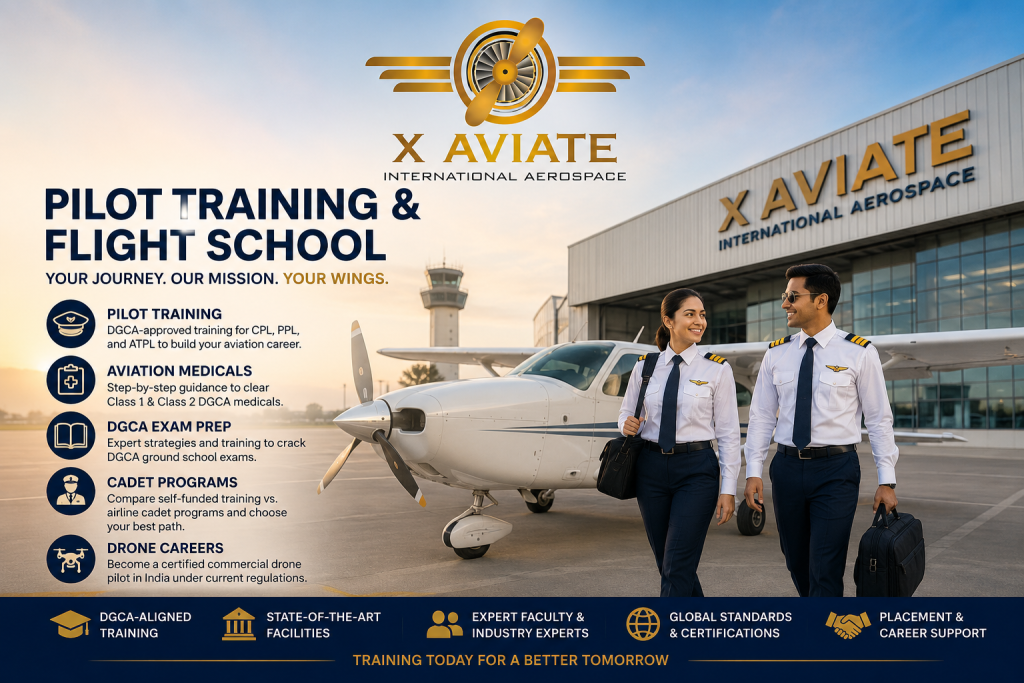
CPL vs. PPL: Which Pilot License is Right for Your Career Goals?
Choosing between a Commercial Pilot License (CPL) and a Private Pilot License (PPL) is one of the first major decisions for aviation students.
What is a PPL (Private Pilot License)?
A Private Pilot License allows individuals to fly aircraft for personal and recreational purposes. However, PPL holders cannot work as commercial airline pilots or earn money through flying.
Best For:
- Aviation enthusiasts
- Hobby pilots
- Individuals seeking personal flying experience
Advantages:
- Lower training cost
- Shorter duration
- Great introduction to aviation
Limitations:
- No commercial flying opportunities
- Limited career scope
What is a CPL (Commercial Pilot License)?
A Commercial Pilot License is required for students who want to become professional airline pilots and build a career in aviation.
Best For:
- Aspiring airline pilots
- Commercial aviation careers
- International flying opportunities
Advantages:
- Eligibility for airline jobs
- Higher salary potential
- Professional aviation career pathway
Limitations:
- Higher training investment
- Requires extensive flying hours
- DGCA medical and examination requirements
For students aiming to work with airlines, a CPL is the ideal career-focused option.
Aviation Medicals: Step-by-Step Guide to DGCA Class 1 & Class 2 Medical Exams
Before becoming a pilot in India, candidates must pass DGCA-approved aviation medical examinations.
Class 2 Medical Examination
The Class 2 medical is usually the first step for aspiring pilots.
Includes:
- Vision testing
- Hearing assessment
- General physical examination
- Blood and urine tests
Purpose:
To determine whether a candidate is medically fit to begin pilot training.
Class 1 Medical Examination
After clearing Class 2, students must complete the more advanced Class 1 medical examination.
Includes:
- ECG and cardiac evaluation
- Eye and color vision tests
- Psychological and neurological assessments
- Advanced physical fitness checks
Tips to Pass DGCA Medicals:
- Maintain healthy sleep habits
- Avoid smoking and alcohol
- Exercise regularly
- Keep medical records updated
- Complete tests only at DGCA-approved centers
Medical fitness is extremely important in aviation because pilots are responsible for passenger safety and aircraft operations.
DGCA Exam Preparation: 5 Proven Strategies to Crack Ground School Papers
DGCA ground school examinations are considered challenging, but proper preparation can significantly improve success rates.
1. Create a Structured Study Plan
Divide subjects into daily study schedules and focus consistently on technical topics such as:
- Air Navigation
- Meteorology
- Air Regulations
- Technical General
2. Practice Previous Year Question Papers
Solving earlier DGCA exam papers helps students:
- Understand exam patterns
- Improve time management
- Identify important topics
3. Focus on Conceptual Understanding
Instead of memorizing answers, understand aviation concepts deeply. This improves performance in both exams and real-world flying situations.
4. Attend Professional Ground School Training
Training institutes like X Aviate International Aerospace provide expert faculty guidance, mock tests, and structured preparation support for DGCA examinations.
5. Stay Consistent & Avoid Last-Minute Preparation
Regular revision and disciplined study habits are key to clearing DGCA exams successfully.
Airline Cadet Programs vs. Self-Funded Pilot Training
Aspiring pilots often compare airline cadet programs with traditional self-sponsored flight training.
Airline Cadet Programs
These programs are conducted in partnership with airlines and are designed to prepare students directly for airline careers.
Advantages:
- Airline-focused training
- Better career pathway
- Structured curriculum
- Possible airline placement opportunities
Disadvantages:
- Highly competitive selection process
- Expensive training fees
- Strict performance standards
Self-Funded Pilot Training
Students independently complete pilot training through flight schools.
Advantages:
- Greater flexibility
- Freedom to choose training institutes
- Easier admission process
Disadvantages:
- No guaranteed airline placement
- Requires self-managed career planning
- Additional effort needed for airline recruitment
Students should choose based on their budget, career goals, and long-term aviation plans.
Drone Careers in India: How to Become a Certified Commercial Drone Pilot
Drone technology is transforming industries across India, creating strong demand for certified drone pilots.
Steps to Become a Commercial Drone Pilot in India
1. Meet Eligibility Requirements
Candidates generally need:
- Minimum educational qualification
- Basic understanding of aviation safety
- Valid identification documents
2. Enroll in a DGCA-Authorized Drone Training Program
Professional drone training includes:
- UAV operations
- Flight safety procedures
- Airspace regulations
- Drone maintenance basics
3. Complete Practical Flight Training
Students receive hands-on drone flying experience under certified instructors.
4. Pass Required Assessments
After successful training and evaluation, candidates receive drone pilot certification under current Indian aviation regulations.
Career Opportunities for Drone Pilots
Certified drone pilots can work in:
- Agriculture
- Surveying and mapping
- Media and photography
- Infrastructure inspection
- Logistics and delivery services
- Defense and surveillance sectors
Drone aviation is becoming one of the fastest-growing aviation career fields in India.
Start Your Aviation Journey with X Aviate International Aerospace
Whether your goal is becoming a commercial airline pilot, drone operator, cabin crew professional, or aviation expert, choosing the right aviation institute is essential for success.
X Aviate International Aerospace provides professional aviation training, experienced faculty, DGCA-focused preparation, and career-oriented programs that help students achieve their aviation dreams.
The future of aviation is filled with opportunities — and your journey can begin today.