
The dream of becoming an airline pilot extends far beyond earning a Commercial Pilot License (CPL). One of the most significant milestones in every professional pilot’s career is obtaining a Type Rating—an advanced certification that authorizes a pilot to operate a specific aircraft model safely and efficiently. Whether it’s an Airbus A320, Boeing 737, or another commercial aircraft, airlines require pilots to complete aircraft-specific training before they can fly passengers.
In today’s highly competitive aviation industry, understanding the importance of Type Rating is essential for aspiring pilots planning their career path.
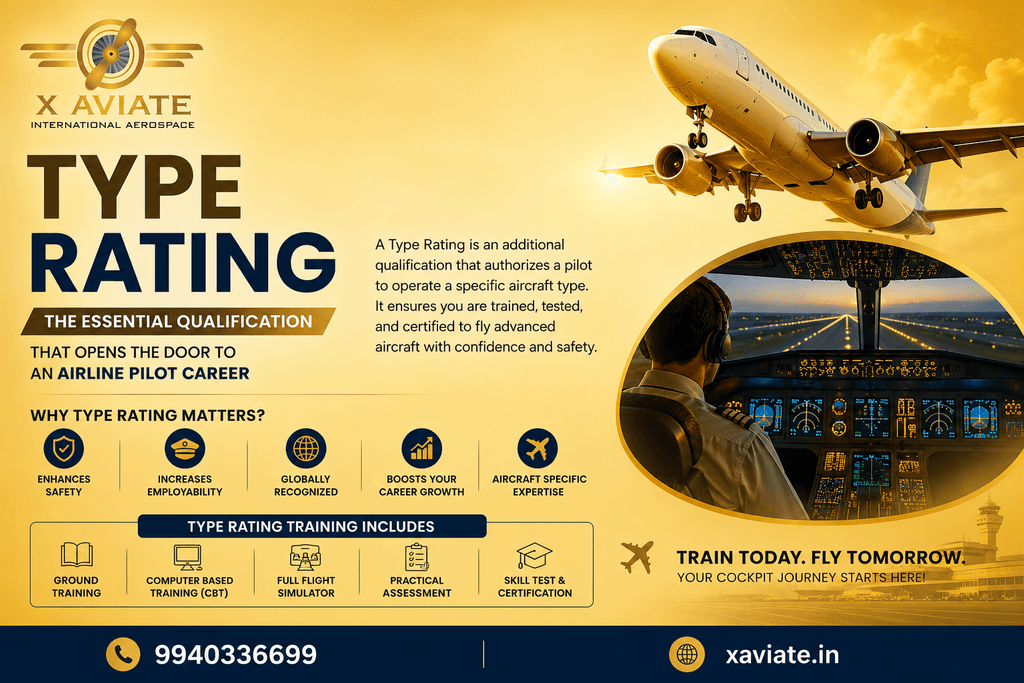
What is a Type Rating?
A Type Rating is an additional qualification added to a pilot’s license that certifies the pilot has successfully completed specialized training to operate a particular aircraft type. Unlike a general pilot license, a Type Rating focuses on one aircraft family, covering its systems, performance, emergency procedures, and operational characteristics.
International aviation authorities such as the FAA and EASA require type ratings for turbojet aircraft and other complex aircraft because these aircraft demand aircraft-specific knowledge and operational proficiency.
Why is Type Rating Important?
Modern commercial aircraft are technologically advanced and differ significantly in their:
- Flight Management Systems (FMS)
- Glass Cockpit Operations
- Fly-by-Wire Technology
- Autopilot Systems
- Aircraft Performance
- Emergency Procedures
- Aircraft Limitations
- Standard Operating Procedures (SOPs)
Because every aircraft behaves differently, airlines cannot allow pilots to transition directly from one aircraft to another without dedicated training.
Type Rating ensures:
- Maximum flight safety
- Regulatory compliance
- Operational efficiency
- Standardized airline procedures
- Passenger confidence
Who Needs a Type Rating?
A Type Rating is generally required for:
- Commercial Airline Pilots
- First Officers
- Captains
- Corporate Jet Pilots
- Business Aviation Pilots
- Cargo Airline Pilots
Examples of aircraft requiring Type Rating include:
- Airbus A320 Family
- Boeing 737 NG/MAX
- Boeing 777
- Boeing 787 Dreamliner
- Airbus A330
- Airbus A350
- Embraer E-Jets
- Bombardier CRJ Series
The exact requirements depend on the applicable aviation authority and aircraft classification.
What Does Type Rating Training Include?
Professional Type Rating programs combine classroom instruction, simulator training, and practical assessments.
1. Ground School
Pilots learn:
- Aircraft Systems
- Electrical Systems
- Hydraulic Systems
- Fuel Systems
- Flight Controls
- Landing Gear
- Aircraft Performance
- Weight & Balance
- Limitations
- Operational Procedures
2. Computer-Based Training (CBT)
Interactive learning modules help pilots understand aircraft systems through animations, videos, and assessments before simulator sessions.
3. Full Flight Simulator (FFS)
This is the core component of Type Rating.
Pilots practice:
- Normal Operations
- Instrument Procedures
- Engine Failures
- Hydraulic Failures
- Electrical Failures
- Emergency Landings
- Low Visibility Operations
- Crosswind Landings
- Abnormal Situations
Modern Level D Full Flight Simulators replicate real aircraft behavior with exceptional accuracy, enabling pilots to train safely without leaving the ground.
4. Skill Test
After completing training, pilots undergo a proficiency check with an approved examiner. Successful completion results in the Type Rating being endorsed on the pilot’s licence according to regulatory requirements.
Popular Aircraft Type Ratings
Some of the world’s most common airline Type Ratings include:
- Airbus A320 Family
- Boeing 737
- Boeing 777
- Boeing 787 Dreamliner
- Airbus A330
- Airbus A350
- ATR 72
- Embraer E190
Airlines select pilots based on fleet requirements, making these ratings highly valuable in the global aviation job market.
Benefits of Completing a Type Rating
Increased Employability
Many airlines prefer pilots who already hold a valid aircraft Type Rating, reducing their training time before line operations.
Better Career Opportunities
Type Rating opens doors to domestic and international airlines operating modern commercial fleets.
Enhanced Flight Safety
Aircraft-specific training prepares pilots to manage routine operations as well as abnormal and emergency situations confidently.
Global Recognition
Type Ratings follow internationally recognized regulatory standards, making pilot qualifications transferable across many aviation markets, subject to local licensing requirements.
Type Rating vs Commercial Pilot License (CPL)
| Commercial Pilot License | Type Rating |
|---|---|
| Qualifies a pilot to fly commercially | Qualifies a pilot to operate a specific aircraft type |
| Covers general flying skills | Covers aircraft-specific systems and procedures |
| First step toward an airline career | Required before operating many commercial aircraft |
Career Path After Type Rating
A typical airline pilot progression includes:
- Student Pilot
- Private Pilot License (PPL)
- Commercial Pilot License (CPL)
- Instrument Rating
- Multi-Engine Rating
- Type Rating
- First Officer
- Senior First Officer
- Captain
- Training Captain or Examiner
The Future of Type Rating
As aviation continues to evolve with advanced avionics, automation, and digital cockpit technologies, Type Rating programs are becoming increasingly sophisticated. Airlines now emphasize scenario-based training, Crew Resource Management (CRM), Threat and Error Management (TEM), and evidence-based training alongside technical proficiency to prepare pilots for real-world operations.
Why Learn About Type Rating with X Aviate?
At X Aviate, we believe that understanding every stage of an aviation career is essential for aspiring professionals. From foundational aviation education to advanced airline career guidance, our mission is to equip students with industry knowledge, career awareness, and professional development opportunities that prepare them for success in the global aviation sector.
Whether your goal is to become a commercial pilot, cabin crew member, aircraft maintenance engineer, or aviation management professional, understanding concepts like Type Rating is an important step toward building a rewarding career in aviation.
Conclusion
A Type Rating is much more than an additional certification—it is a critical qualification that enables pilots to safely operate complex commercial aircraft. Through rigorous classroom instruction, simulator sessions, and proficiency evaluations, pilots gain the specialized expertise required by airlines worldwide. As global aviation continues to expand, Type Rating remains one of the most valuable investments in a professional pilot’s career.